
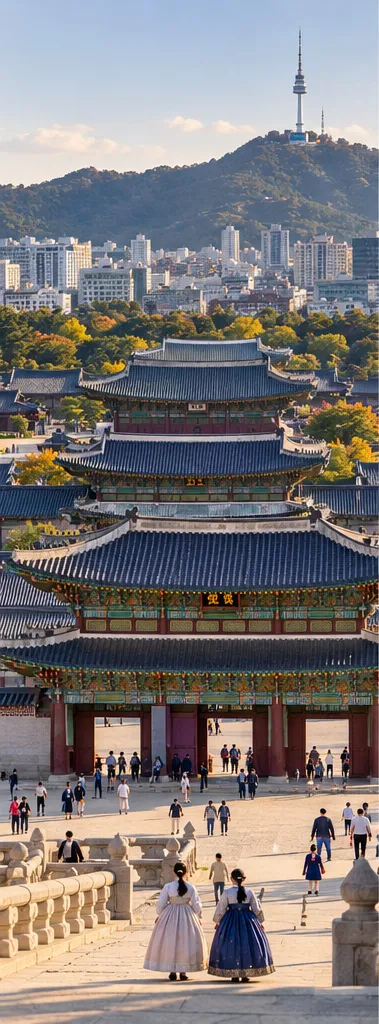
Gyeongbokgung Palace
South Korea
Highlights of South Korea
10 Days
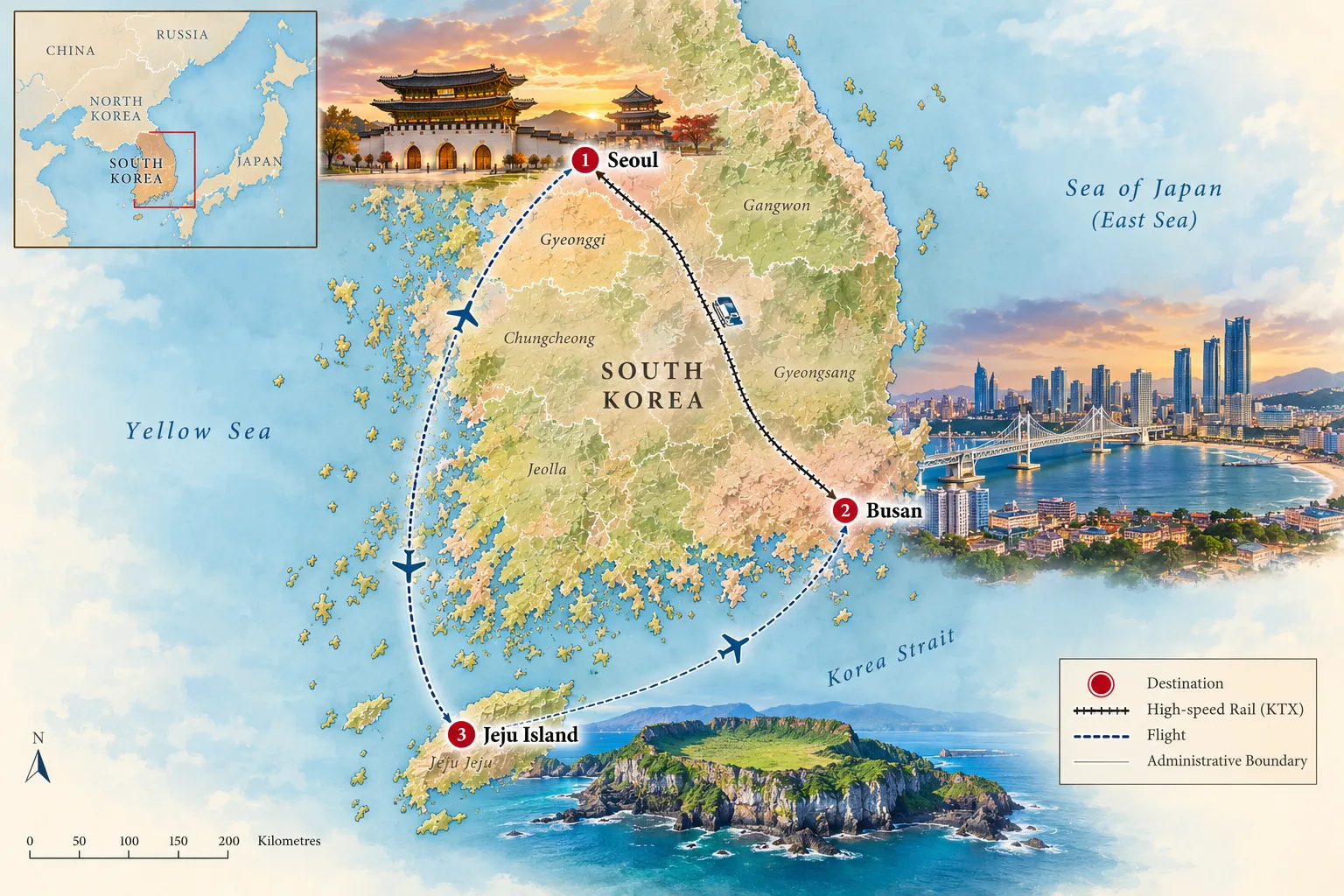
Seoul • Busan • Jeju Island • Seoul
South Korea unfolds through a remarkable contrast of royal heritage, contemporary city life and volcanic island landscapes. Begin in Seoul, exploring grand Joseon palaces, traditional hanok neighbourhoods and atmospheric markets. Continue south by high-speed rail to Busan, where colourful hillside communities meet a dramatic coastline and lively harbour culture. Fly onward to Jeju Island for volcanic landscapes, lava formations, waterfalls and distinctive island traditions. Return to Seoul for a final evening before departure, bringing together the country’s history, culture and natural beauty in one carefully paced journey.
Highlights
Gyeongbokgung Palace
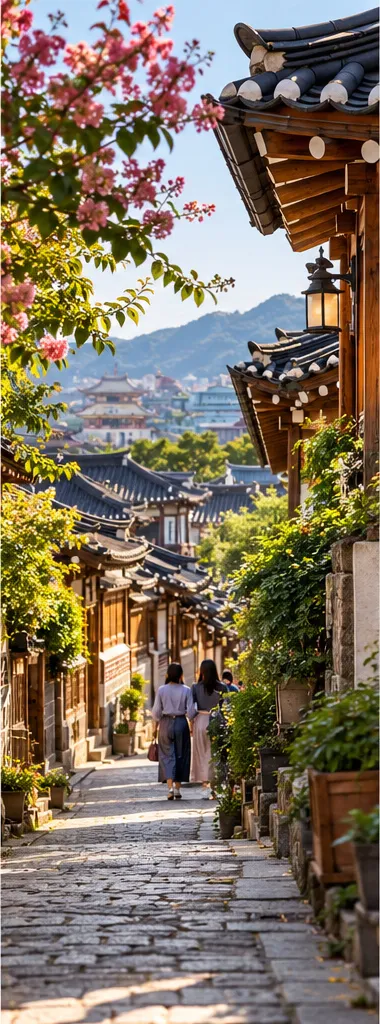
Bukchon Hanok Village
Changdeokgung Palace
Gamcheon Culture Village
Songdo Marine Cable Car
Jeju’s volcanic caves, cliffs and waterfalls
Landscape of Seongsan Ilchulbong
DAY 1 — ARRIVE IN SEOUL
Arrive in Seoul, a city where centuries-old palaces, traditional neighbourhoods and contemporary architecture exist alongside one another. After your arrival and transfer into the city, spend the remainder of the day at leisure, allowing time to settle in or take an initial walk through the capital.
Overnight: Seoul
DAY 2 — SEOUL & THE DMZ REGION
Travel towards Gimpo and the Aegibong Observatory, situated near the Korean border, for views towards the surrounding border region. Continue to the Paju DMZ area and visit Imjingak, the Mangbaedan Altar and Freedom Bridge, places closely associated with Korea’s modern history and the division of the peninsula.
A cable-car experience provides an elevated perspective of the surrounding landscape. Return towards Seoul and visit City Hall before continuing to Deoksugung Palace, where traditional royal architecture stands beside the city’s modern skyline.
Later walk towards Myeongdong, one of Seoul’s most vibrant commercial districts, before returning through the city using Seoul’s modern public transport system.
Overnight: Seoul
DAY 3 — SEOUL’S ROYAL & CONTEMPORARY FACES
Continue discovering Seoul with a visit to Changdeokgung Palace, one of the city’s great royal complexes and a UNESCO World Heritage Site. Continue to Bukchon Hanok Village, where traditional Korean houses line the narrow streets of this historic neighbourhood.
Visit the War Memorial of Korea before continuing towards Gangnam, one of Seoul’s most recognisable contemporary districts. Conclude the sightseeing with time around Lotte World Tower and its surrounding urban landscape before returning to the hotel for an evening at leisure.
Overnight: Seoul
DAY 4 — SEOUL • SUWON • JEONJU
Begin the day at Gyeongbokgung Palace, Seoul’s principal royal palace, with an opportunity to witness the Changing of the Guard ceremony when scheduled.
Continue south to Suwon, historically important as a former capital and known for its extensive fortifications. Explore Hwaseong Fortress and Hwaseong Haenggung, the former temporary royal palace.
Continue onwards to Jeonju and explore its atmospheric Hanok Village, characterised by traditional houses, small streets, craft shops and galleries.
Overnight: Jeonju
DAY 5 — JEONJU • SUNCHANG • DAMYANG • HAEINSA • BUSAN
Leave Jeonju and travel towards Sunchang, renowned for its traditional gochujang-making heritage. Visit the Gochujang Village, where traditional houses and courtyards filled with earthenware jars reflect a long-established culinary culture. Experience the traditional process of making this distinctive Korean chilli paste.
Continue to Damyang and explore Juknokwon Bamboo Forest, following paths through dense bamboo groves and visiting the Bamboo Museum.
Proceed through the countryside towards Haeinsa, one of Korea’s most important Buddhist temple complexes and a UNESCO World Heritage Site. Continue to Busan, Korea’s major southern port city, arriving amid its distinctive coastal atmosphere.
Overnight: Busan
DAY 6 — BUSAN • FUKUOKA
Begin with Haedong Yonggungsa, a historic Buddhist temple dramatically positioned beside the sea. Return to Busan and visit the United Nations Memorial Cemetery, followed by the Nampo Port area and its lively fish-market district.
Later transfer to the airport for the flight from Busan to Fukuoka in Japan. On arrival, transfer into the city and settle into your Japanese surroundings.
Overnight: Fukuoka
DAY 7 — FUKUOKA • IWAKUNI • MIYAJIMA • HIROSHIMA
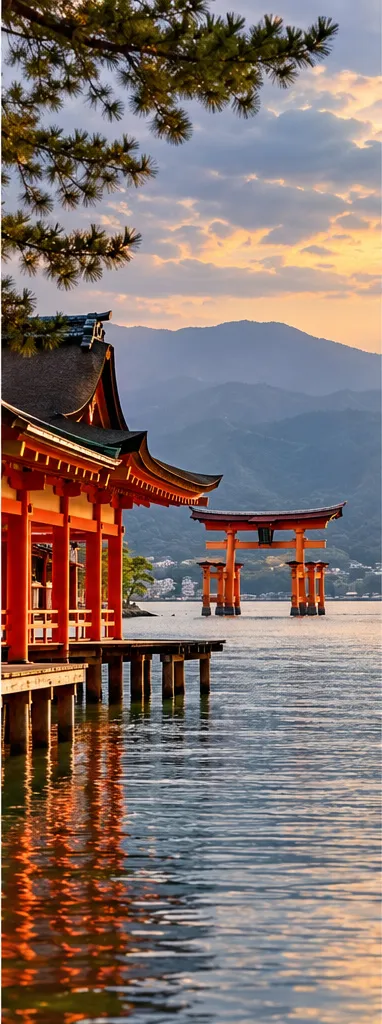
Leave Fukuoka and travel towards Iwakuni, where the elegant Kintai-kyo Bridge spans the Nishiki River. Continue towards Miyajimaguchi and cross by ferry to Miyajima Island.
Explore the sacred setting of Itsukushima Shrine, whose celebrated structures extend over the waters of the Seto Inland Sea. Spend time exploring the island before continuing to Hiroshima.
Visit Hiroshima’s Peace Memorial Park, the Atomic Bomb Dome and the Peace Memorial Museum, which document the city’s wartime history and its aftermath.
Overnight: Hiroshima
DAY 8 — HIROSHIMA • MATSUYAMA
Travel by ferry across the Seto Inland Sea towards Shikoku, passing through a landscape of islands and waterways.
Arrive in Matsuyama and ascend by cable car towards Matsuyama Castle, enjoying views over the city. Continue to Ishiteji Temple, an important Buddhist pilgrimage site, before exploring the Dogo area and its historic bathing tradition.
Overnight: Matsuyama
DAY 9 — MATSUYAMA • KOTOHIRA • TAKAMATSU • NARUTO • KOBE
Travel towards Kotohira and visit Kotohiragu Shrine on Mount Zozu, a major pilgrimage destination traditionally associated with seafarers. Continue to Takamatsu and explore Ritsurin Garden, celebrated for its carefully composed landscape of ponds, bridges, trees and garden structures.
Proceed to Naruto and experience the Great Naruto Bridge, including its glass-floor observation area above the strait. Continue across the bridges and islands of the Seto Inland Sea towards Kobe, arriving in the evening.
Overnight: Kobe
DAY 10 — KOBE • OSAKA • MOUNT KOYA
Begin in Kobe with a visit to the Earthquake Memorial Museum, recalling the devastating 1995 earthquake and the city’s subsequent reconstruction. Depending on the operating schedule, an alternative Kobe experience may be arranged.
Continue to Osaka before travelling into the mountains towards Mount Koya, one of Japan’s most important centres of Shingon Buddhism.
Explore Okuno-in, an atmospheric sacred site surrounded by an extensive cemetery, followed by Kongobuji Temple. In the evening, experience the distinctive atmosphere of a Buddhist temple stay and, subject to availability, participate in a Zen meditation session.
Overnight: Mount Koya
DAY 11 — MOUNT KOYA • KYOTO
Begin the morning quietly on Mount Koya before travelling towards Kyoto, Japan’s former imperial capital and a remarkable repository of traditional architecture, gardens and cultural heritage.
Visit Fushimi Inari Shrine and follow the pathway beneath its celebrated succession of vermilion torii gates. Continue to Kyoto’s Imperial Palace and Kinkaku-ji, the Golden Pavilion, set beside its beautifully composed gardens.
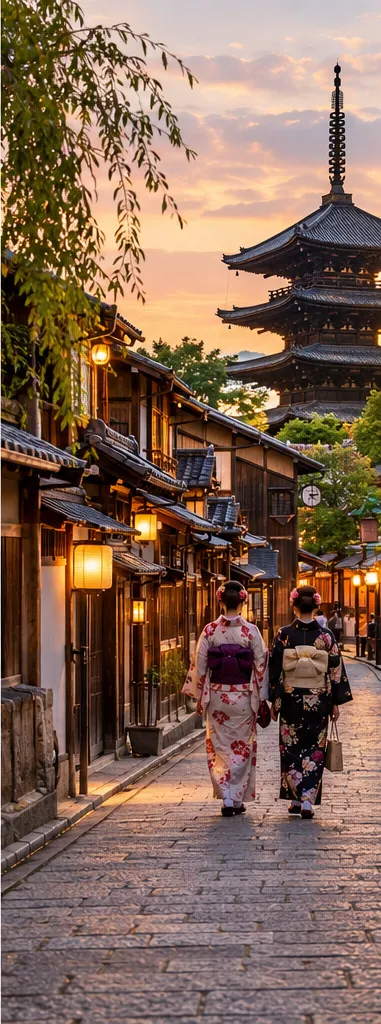
Later explore Gion, Kyoto’s historic traditional district, with time to wander its atmospheric streets and experience the distinctive character of the old capital.
Overnight: Kyoto
DAY 12 — KYOTO & DEPARTURE
Enjoy a final morning in Kyoto before making your way to the airport for your onward flight. The journey concludes amid the temples, gardens, traditional streets and enduring cultural traditions of Japan’s former imperial capital.