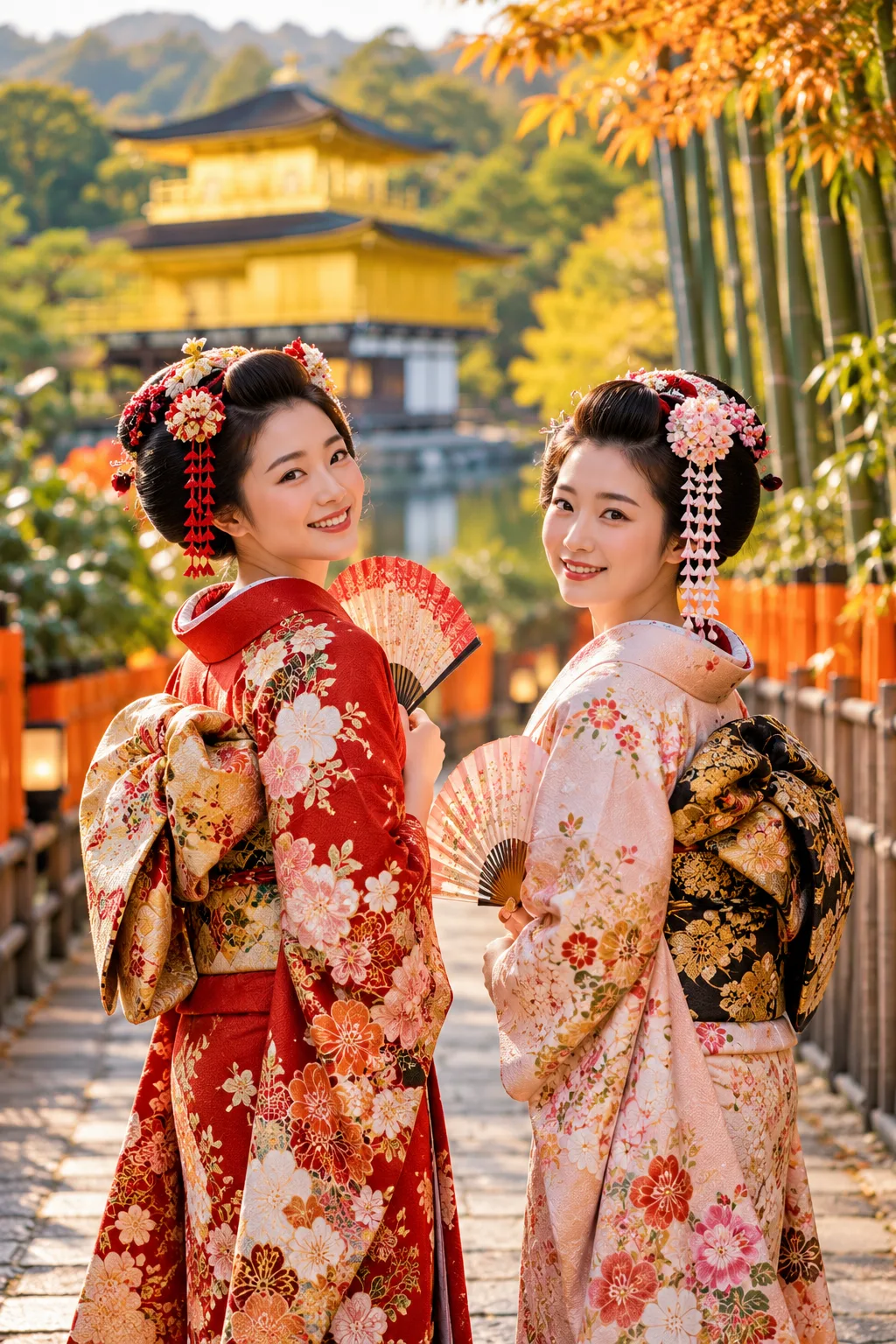

Kinakakuji, Kyoto, Japan
Japan Explorer
11 Days
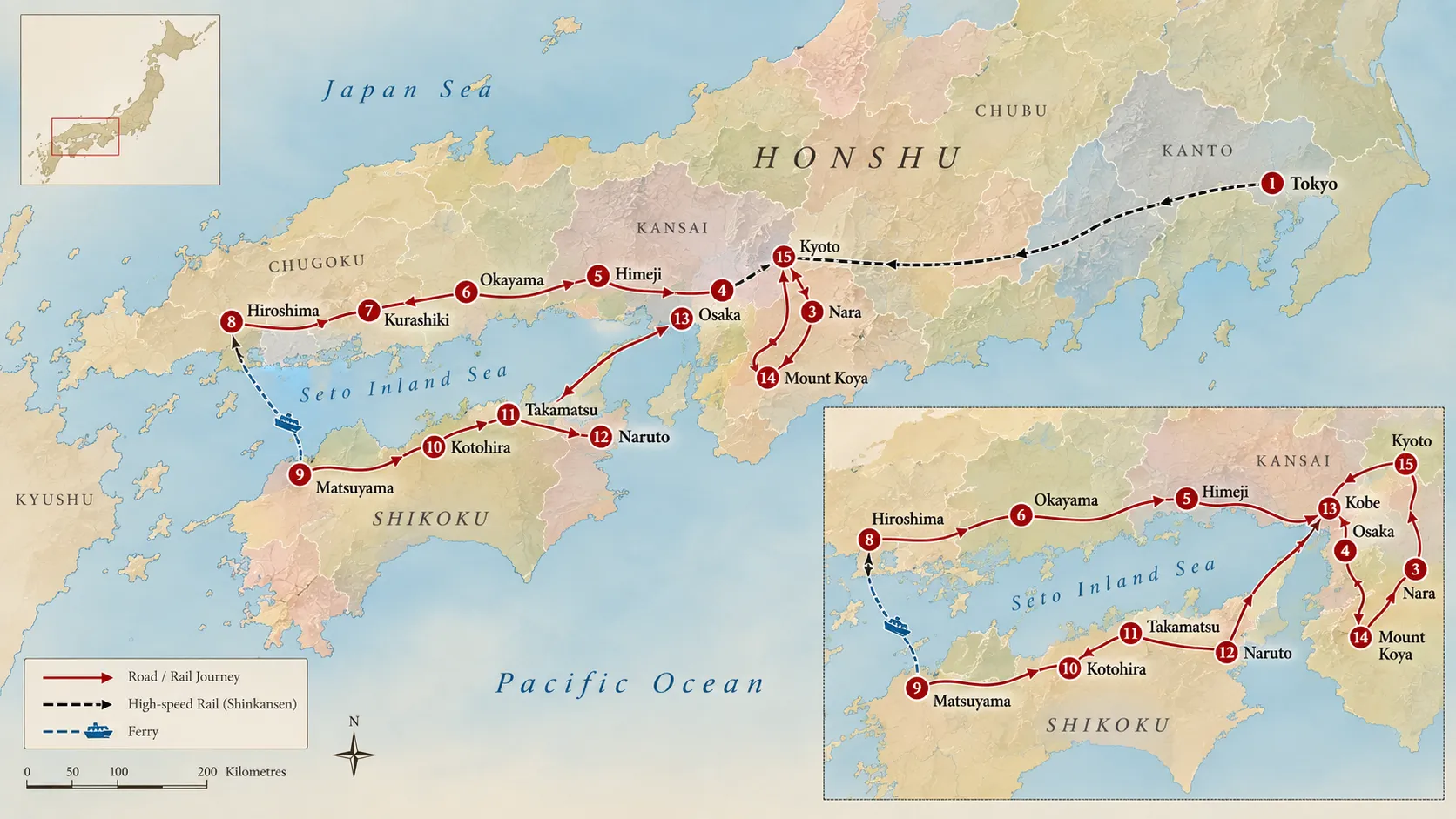
Tokyo • Kyoto • Osaka • Hiroshima • Matsuyama • Naruto • Kobe • Mount Koya • Kyoto
Japan unfolds in layers, where a futuristic metropolis can give way to a centuries-old temple, a landscaped garden or a quiet pilgrimage trail. Begin in Tokyo, moving between historic shrines, imperial landmarks and districts shaped by contemporary culture.
Continue by high-speed train to Kyoto, where sacred gates, temple gardens and traditional quarters reveal the country’s classical character. The journey then travels west through Nara, Osaka, Himeji and Okayama, combining religious heritage, castle architecture and refined gardens.
Beyond Hiroshima, the route crosses the Seto Inland Sea to Shikoku, introducing a slower rhythm of castles, pilgrimage temples, gardens and historic bathhouses.
The journey culminates at Mount Koya, where a traditional Buddhist temple stay offers a quiet and contemplative final chapter before returning to Kyoto.
Highlights
Tokyo’s modern and historic landmarks
Tokyo Skytree and traditional Asakusa
Fushimi Inari and Kyoto’s Golden Pavilion
Nara’s Todaiji Temple and deer park
Horyuji and ancient Buddhist heritage
Himeji Castle and Korakuen Garden
Hiroshima and Miyajima
Matsuyama Castle and Dogo Onsen
Ritsurin Garden and Shikoku pilgrimage
Mount Koya temple stay and meditation
Day 1 — Arrive in Tokyo
Arrive at Haneda or Narita International Airport and transfer to your hotel in Tokyo. The remainder of the day is free to settle in and begin acquainting yourself with the atmosphere of Japan’s capital, a city where major commercial districts, cultural institutions and green spaces coexist within a vast urban landscape.
Overnight: Tokyo
Day 2 — Tokyo
Discover Tokyo through a varied sequence of landmarks and neighbourhoods. Begin at Zojoji Temple, set beside Tokyo Tower, before continuing to Shibuya and its celebrated crossing. Visit Meiji Shrine and continue along Omotesando towards the Imperial Palace and Nijubashi Bridge. Pass through Akihabara, associated with manga, anime and electronics, before travelling to Tokyo Skytree for panoramic city views. Continue to Asakusa to explore Sensoji Temple and Nakamise Street. Later, take the metro to Shinjuku for an evening walk through one of Tokyo’s most animated districts, followed by dinner before returning to the hotel.
Overnight: Tokyo
Day 3 — Tokyo to Kyoto by High-Speed Train
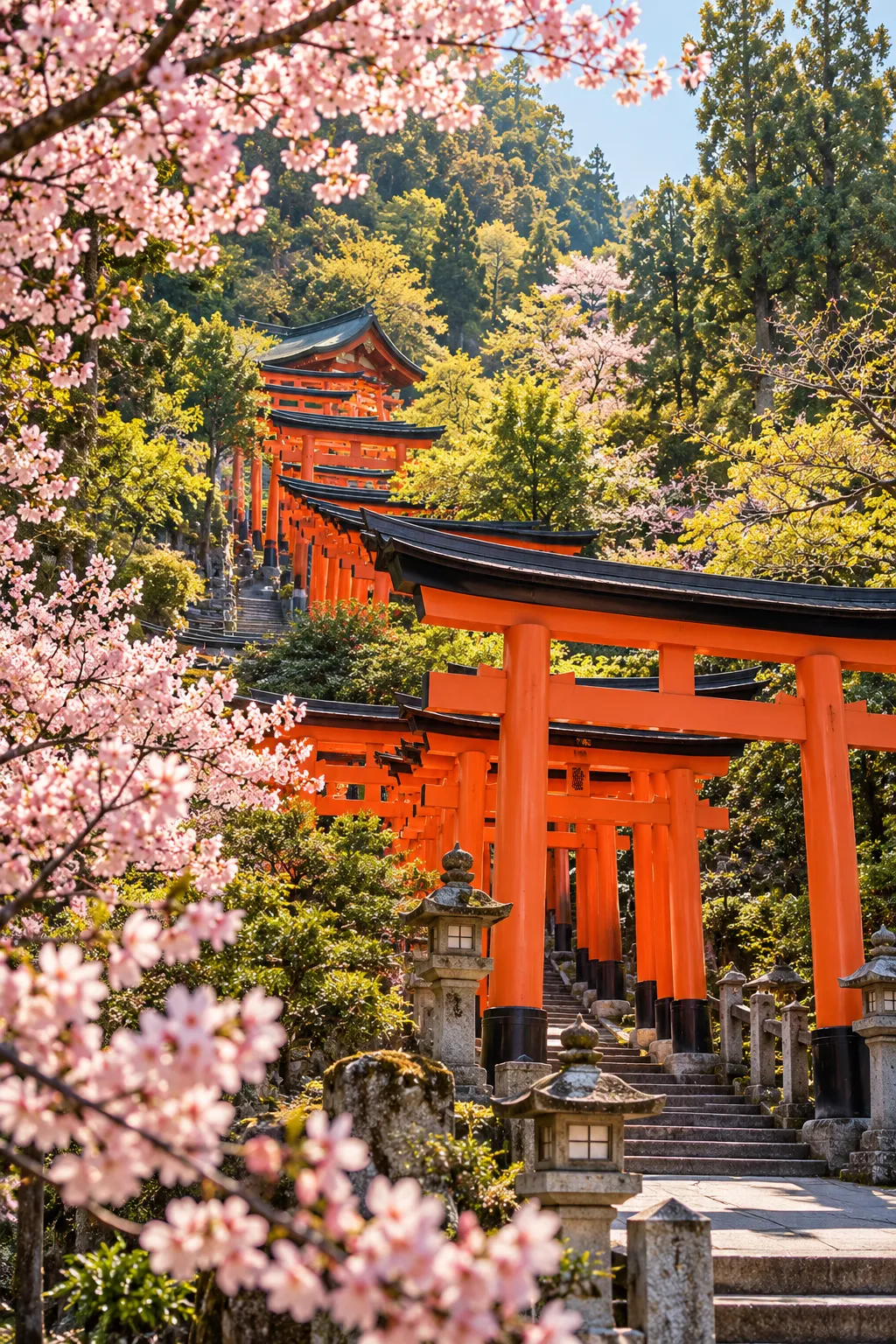
Transfer to the station for the high-speed train to Kyoto. On arrival, begin exploring the former imperial capital with a visit to Fushimi Inari Taisha, celebrated for its long corridors of vermilion torii gates. Continue to the Imperial Palace before visiting Kinkakuji, the Golden Pavilion, whose striking gold-covered upper levels overlook a reflective garden pond. Later, enjoy time in Gion, Kyoto’s historic traditional quarter, before returning to the hotel.
Overnight: Kyoto
Day 4 — Kyoto to Nara and Osaka
Travel to Nara and visit Todaiji Temple, famed for its Great Buddha, followed by time in Nara Park among its freely roaming deer. Continue to Horyuji Temple, one of Japan’s most important early Buddhist monuments and a renowned centre of ancient wooden architecture. Proceed to Osaka and spend the evening in Dotonbori, the city’s lively entertainment district, with its restaurants, cafés and illuminated streets.
Overnight: Osaka
Day 5 — Osaka to Himeji and Okayama
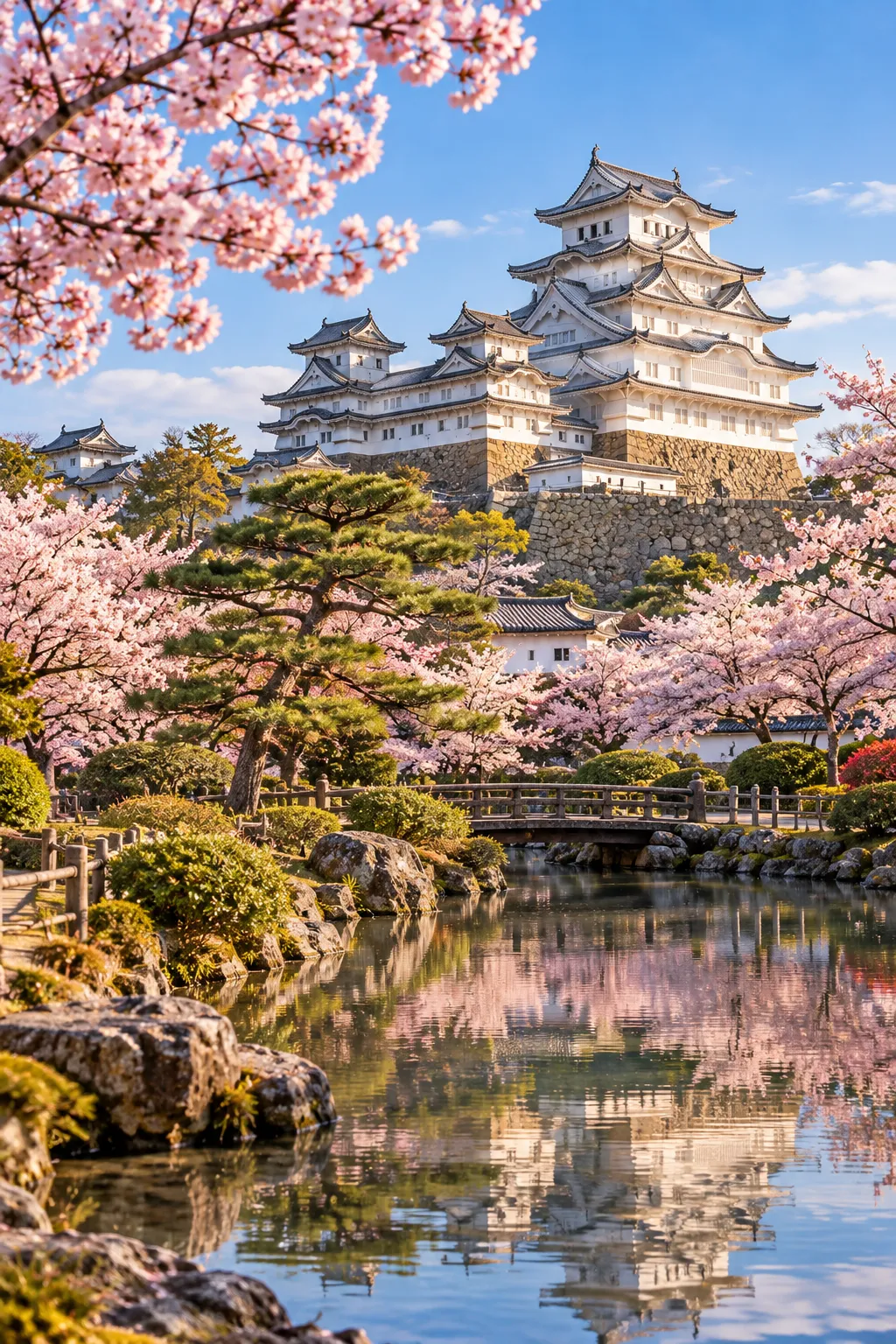
Leave Osaka for Himeji and explore Himeji Castle, an outstanding example of Japanese castle architecture with an extensive complex of defensive structures and historic buildings. Continue to Okayama after lunch and visit Korakuen, one of Japan’s celebrated landscape gardens, known for its carefully composed ponds, streams, open lawns and traditional garden features. The remainder of the day is at leisure.
Overnight: Okayama
Day 6 — Okayama to Kurashiki and Hiroshima
Travel towards Hiroshima with a stop in Kurashiki, whose historic canal district retains the character of its former merchant and storehouse quarter. Continue to Hiroshima and visit Peace Memorial Park, including the Atomic Bomb Dome and Peace Memorial Museum. Later, cross by ferry to Miyajima and visit Itsukushima Shrine, dramatically positioned over the water. Allow time to explore the island’s historic streets before returning to Hiroshima.
Overnight: Hiroshima
Day 7 — Hiroshima to Matsuyama
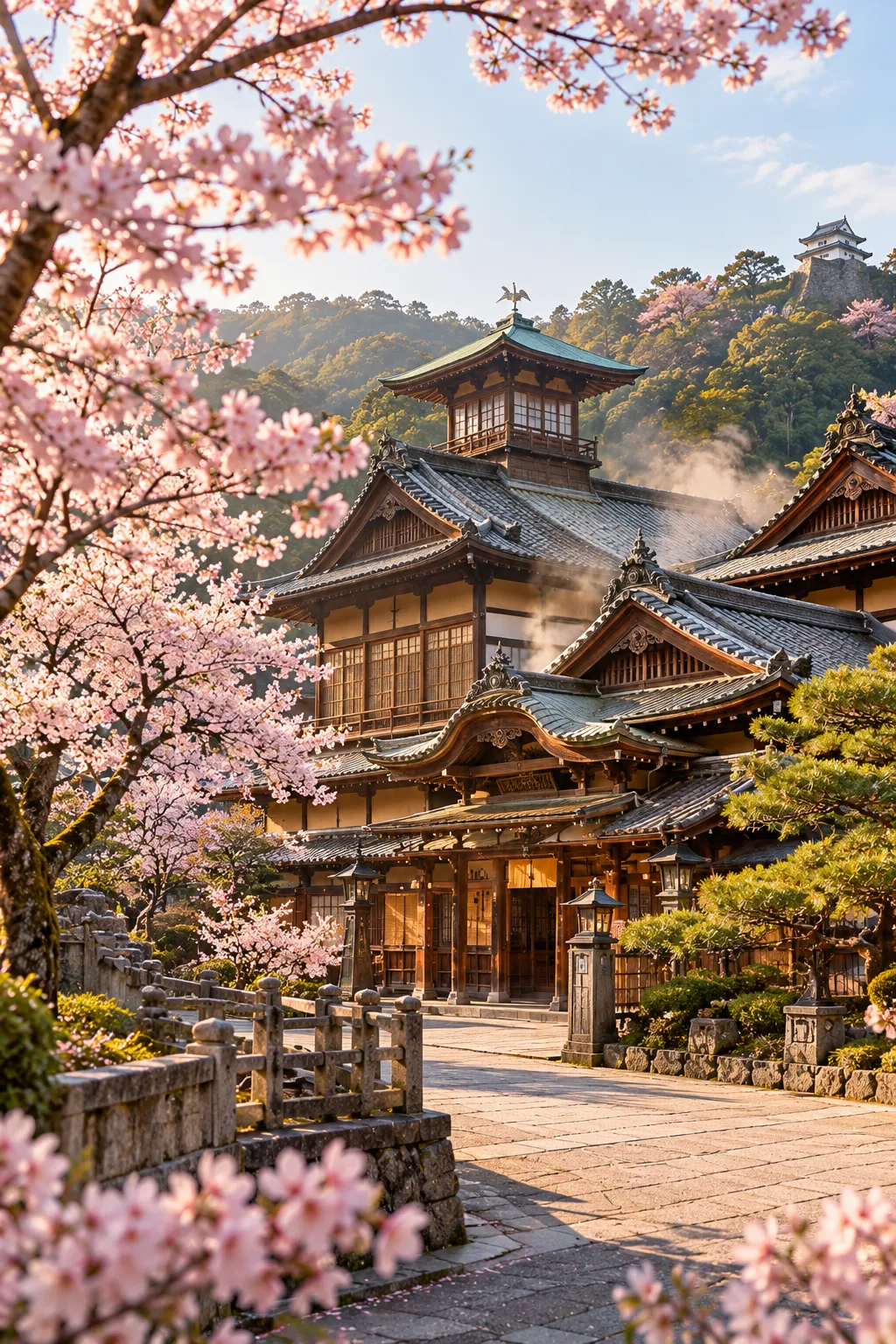
Board the ferry to Shikoku, travelling across the island-dotted waters of the Seto Inland Sea to Matsuyama. Take the cable car up to Matsuyama Castle before visiting Ishiteji, a Buddhist temple associated with the Shikoku pilgrimage. Continue to Dogo Onsen, one of Matsuyama’s historic bathing districts, before returning to the hotel.
Overnight: Matsuyama
Day 8 — Matsuyama to Kotohira, Takamatsu, Naruto and Kobe
Continue to Kotohira and visit Kotohira-gu, an important Shinto pilgrimage shrine reached by a long stone stairway. Proceed to Takamatsu to explore Ritsurin Garden, an expansive landscape of ponds, streams, bridges, paths and traditional garden structures. Continue towards Naruto and experience the great bridge crossing before travelling onwards to Kobe.
Overnight: Kobe
Day 9 — Kobe to Osaka and Mount Koya
Begin in Kobe with a visit to the Earthquake Memorial Museum, commemorating the devastating 1995 earthquake. Continue via Osaka towards Mount Koya, an important centre of Shingon Buddhism. Explore Okunoin, associated with Kukai, and visit Kongobuji Temple, the head temple of the Mount Koya complex. Later, settle into a Buddhist temple for a traditional overnight experience, with vegetarian cuisine and a meditation session where available.
Overnight: Mount Koya — Buddhist temple stay
Day 10 — Mount Koya to Kyoto
Begin the day with a traditional breakfast at the temple before departing for Kyoto. The remainder of the day is at leisure, providing an opportunity to revisit a favourite part of the city, explore its streets and gardens independently, or simply enjoy a quieter final day in Japan.
Overnight: Kyoto
Day 11 — Kyoto and Departure
After breakfast, check out of the hotel and proceed independently to Kansai International Airport for your homeward flight. The journey concludes with a final transition from Kyoto’s historic atmosphere to the onward journey home.
Overnight: — Departure